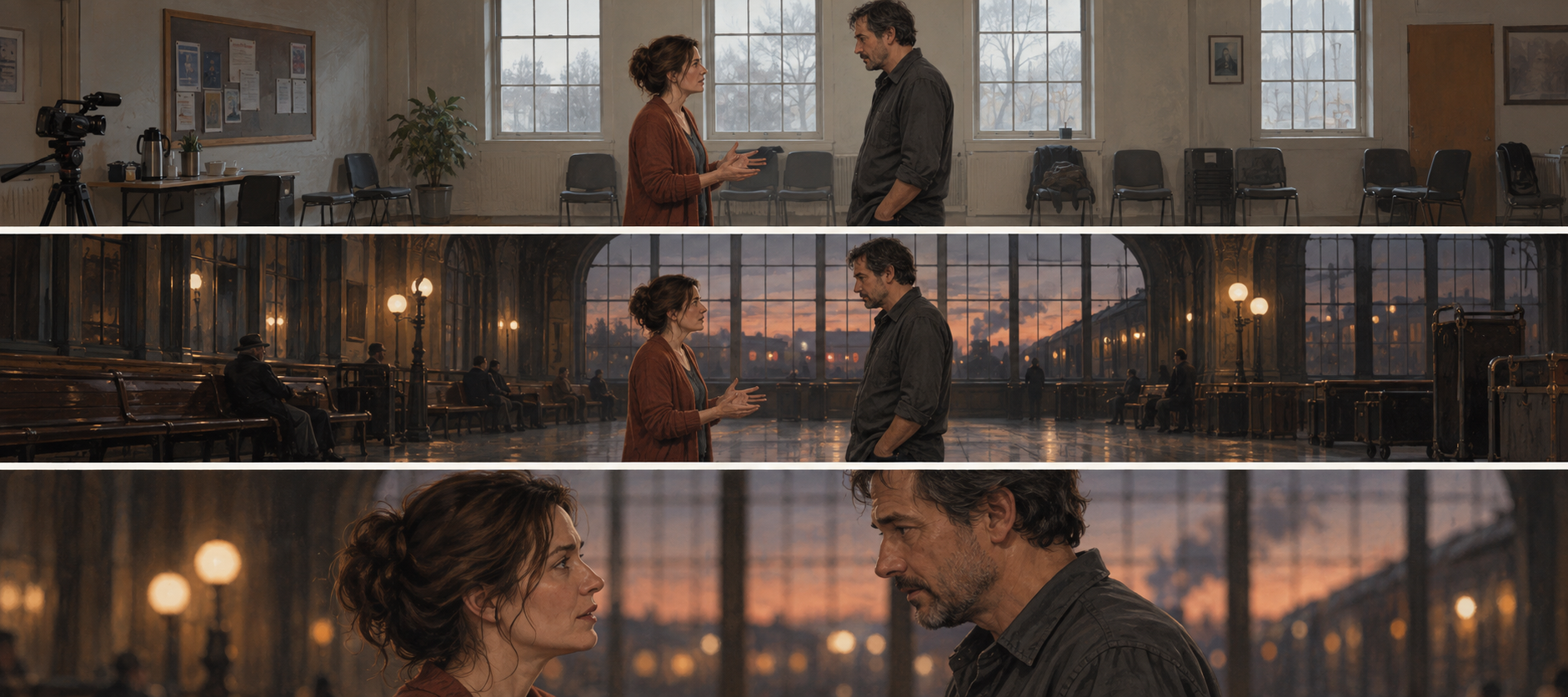
Concept illustration: a performance captured in an ordinary room, an imagined setting, and closer coverage of the same scene. AI-generated artwork; not Ananke footage or a demonstration of current capability.
A film built around the take
Ananke starts with a human performance captured in a real space. Actors have room to move and work with one another. The film can then take shape around the take the director chooses.
Our goal is to preserve that performance while making everything else in the picture and soundtrack interchangeable. We are also developing coverage drawn from master shots, so the edit can use different views of the same performance.
The walkthrough below describes the workflow we are building. Ananke is in development. Capture requirements, supported tools and delivery formats will be established through pilot work.
01 / Prepare the scene
The script comes first. Before capture, the director decides what the scene needs to communicate, where the actors move and which details must carry from one shot to the next. References establish the intended setting, lighting, wardrobe and sound. The production also identifies what belongs to the recorded performance and what it wants to change around it.
02 / Give actors room to perform
Actors work together in a real location, with space to move, react and play the scene. We are designing the capture process to work without a purpose-built studio, a green or blue screen, or a motion-capture suit covered in tracking markers. Camera and sound recording still need to provide usable source material. Pilot work will establish the practical capture requirements.
03 / Choose the master take
The director chooses the take for its acting. That recording becomes the reference for timing, movement, expression and interaction between performers. Original picture and dialogue remain available throughout the work, so later versions can be compared with the take that earned the director’s trust.
04 / Shape the world around it
The guiding principle is simple: preserve the performance and make everything else in the picture and soundtrack interchangeable. A room can become a different setting; its light, atmosphere and surrounding detail can serve the story. The actor’s choices remain the source of the scene. Changes should support those choices and hold up across the sequence.
05 / Develop the coverage
We are developing coverage drawn from master shots: additional views of the same take for the edit. The aim is to give filmmakers useful framing choices while retaining the performance’s timing and relationships. The range of views a recording can support will depend on the captured material and must be established through testing.
06 / Build the soundtrack
Vocal delivery is part of the performance we want to preserve. Around it, filmmakers can shape the scene with ambience, effects and music. The intended workflow keeps those elements separable for revision and mixing, with dialogue and picture checked together so that an adjustment to the image does not break the scene’s rhythm.
07 / Review the scene in motion
A convincing frame is only part of the job. Each version needs to work in playback and across cuts. Review follows the actors’ timing and eyelines, the placement of objects, the geography of the space and the joins between shots. Notes stay connected to the source take and the version under review; approved work remains available when a change is tried.
08 / Finish for the production
The final stage brings approved picture, sound and editorial choices together. Our aim is a practical handoff into a production’s existing finishing process, with enough source and version information to make later revisions manageable. File formats, resolution and delivery requirements will be agreed for each pilot as the integrated workflow is tested.
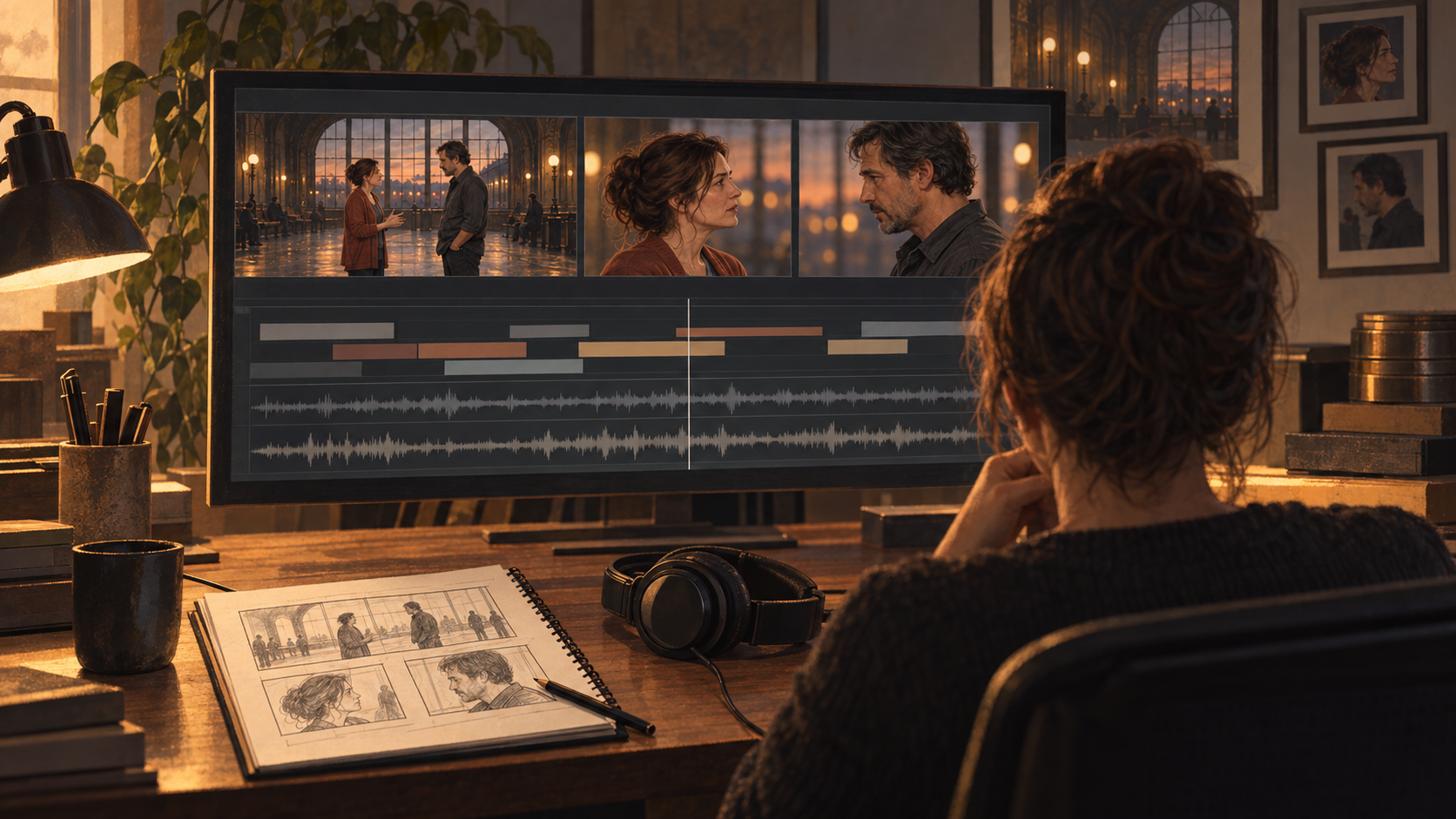
Concept illustration: reviewing coverage with separate picture and sound elements. AI-generated artwork; this is not the Ananke interface or a finished production example.
What the production receives
We are designing the handoff around four useful outputs. Exact deliverables will be agreed with each pilot production.
Approved picture
Selected shots and, where appropriate, an assembled sequence for review or finishing. Each result should remain traceable to its source performance and approved version.
Sound elements
Dialogue, ambience, effects and music kept separate where the workflow supports it, giving the production room to revise the mix without rebuilding the whole scene.
Editorial material
Chosen coverage and a reference edit that communicates timing and shot choices to the people finishing the film.
A production record
Source takes, scene references, version history and approval notes kept together so the team can understand a decision and return to an earlier result.
Where the work stands
Ananke is in development. Early internal tooling tracks shots, scene state and decisions. The next step is to test the complete process in a focused narrative pilot: capture, performance preservation, coverage, review and delivery. The pilot must establish what works reliably, what it costs and where the limits are.
Production background
Our background spans scripted production, documentary production, and VFX for commercial and client work. That experience informs the project: attention to actors and story, practical choices during capture, and the revision and finishing work that follows.
Who we want to work with
We welcome conversations with filmmakers, performers and production partners making narrative shorts, proof-of-concept films and commissioned stories. A useful first conversation starts with a scene: the performance it needs, the world around it and the intended delivery.
Contact The Ananke Project